
When Political Commentary Crosses the Line
What employers, educators, and organisations must learn about antisemitic imagery, accountability, reputation, and workplace culture
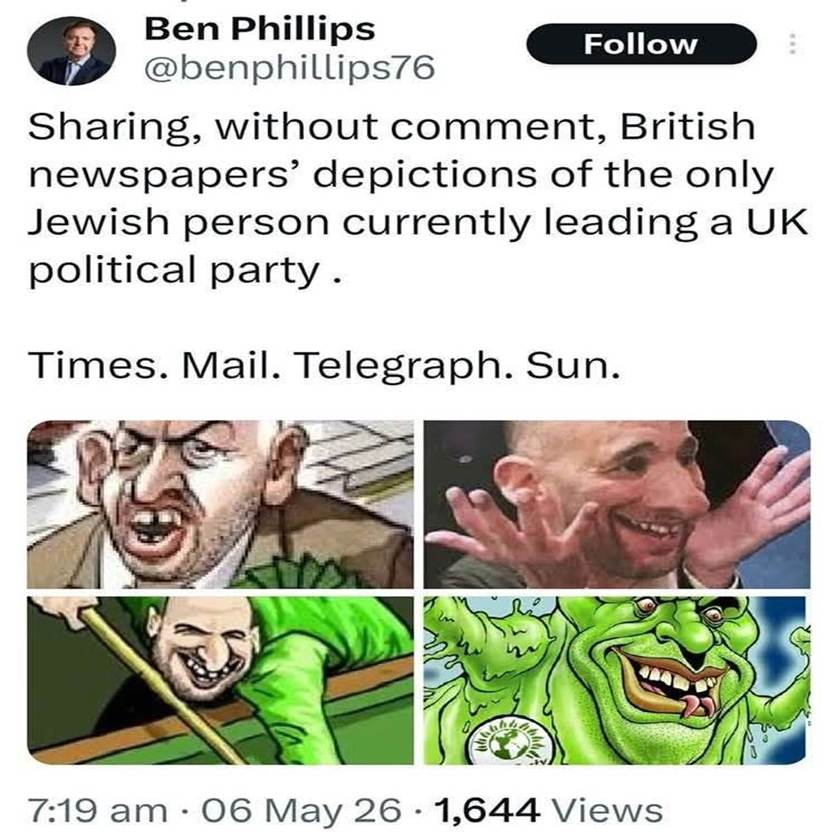
Disclaimer
The image featured in this article is a screenshot of a social media post circulating online at the time of writing. It is included for the purpose of discussion, education, media literacy, and reflection on concerns relating to representation, discriminatory imagery, antisemitic stereotypes, and public discourse.
The inclusion of the image does not constitute verification or endorsement of every individual image, caption, publication attribution, or claim contained within the social media post. Readers are encouraged to consider the wider historical, ethical, and societal context surrounding the use of caricatures, stereotypes, and dehumanising portrayals linked to protected characteristics.
This article focuses on the broader issues of equality, inclusion, workplace culture, reputational risk, psychological safety, media responsibility, and the importance of challenging discrimination in all its forms.
The image shared online raised significant concerns regarding historical antisemitic stereotypes, media ethics, and the impact of dehumanising portrayals in public discourse.
Why This Matters
Political criticism is a fundamental part of democratic society. However, there is an important distinction between challenging political decisions and using imagery that echoes historical discriminatory stereotypes associated with protected characteristics.
Across history, Jewish people have frequently been depicted through grotesque caricatures, exaggerated facial features, and dehumanising imagery. These portrayals were not harmless artistic choices; they were often used to legitimise exclusion, hostility, and discrimination.
When modern depictions resemble these historical tropes, the impact extends far beyond political disagreement.
The Impact on Individuals and Communities
For many Jewish people, images such as these are not viewed in isolation. They can trigger fear, distress, alienation, and concerns about the normalisation of antisemitism within public discourse.
Representation matters. Visual stereotypes can reinforce prejudice and create environments where discrimination feels socially acceptable.
This affects psychological safety in workplaces, educational settings, public institutions, and wider communities.
Why Employers and Organisations Must Pay Attention
Workplace culture does not exist separately from society. Public narratives influence conversations, behaviours, attitudes, and inclusion within organisations.
Employees who repeatedly see discriminatory stereotypes normalised in media and online spaces may feel unsupported, unsafe, or reluctant to speak up.
Employers have a responsibility to ensure all staff feel respected and protected regardless of race, religion, or background.
Legal Accountability
Under the Equality Act 2010, religion and race are protected characteristics. Employers have legal duties to prevent harassment, discrimination, and hostile working environments.
Importantly, harassment is determined not only by intent, but by impact.
Organisations that dismiss concerns about discriminatory imagery, stereotypes, or narratives may face:
• legal complaints
• reputational damage
• employee relations issues
• reduced trust and morale
• safeguarding and wellbeing concerns
Leaders should also be mindful of broader responsibilities under professional standards, safeguarding expectations, and equality frameworks.
Reputation and Public Trust
Organisations are increasingly judged not only on performance, but on values, leadership, and ethical conduct.
How leaders respond to discrimination matters. Silence, minimisation, or inconsistency can seriously damage credibility and public trust.
Communities expect organisations to challenge antisemitism, racism, Islamophobia, misogyny, homophobia, ableism, and all forms of discrimination consistently.
What Organisations Should Be Doing
Organisations should:
• provide meaningful equality, diversity, and inclusion education
• improve understanding of antisemitism and historical stereotypes
• strengthen reporting and accountability mechanisms
• challenge discriminatory language and imagery consistently
• create psychologically safe workplace cultures
• ensure leaders model inclusive behaviour
• embed equality into policies, practice, and decision-making
Why This Has to Stop
Discrimination rarely begins with extreme acts. It often begins with normalised stereotypes, ridicule, dehumanisation, and silence.
A healthy democracy can absolutely support freedom of expression and robust political debate while also rejecting discriminatory tropes and harmful portrayals.
This is not about censorship.
It is about accountability.
It is about professionalism.
It is about protecting dignity.
And it is about ensuring equality is applied consistently to everyone.