
Today, I wanted to shed some light on the beautiful and diverse world of gender identities. Let us talk about being trans and non-binary, and how these identities are valid and important.
Firstly, being transgender means that a person’s gender identity does not align with the sex they were assigned at birth.
For example, someone assigned male at birth may identify as female, someone assigned female at birth may identify as male and some people may not identify at all with the binary genders of male or female. It is crucial to remember that gender identity is deeply personal and should always be respected.
Whilst some of the terms we hear now relating to gender may seem new, gender expansive identities are not. They have existed all over the world across continents, countries and cultures since record-keeping began, and before. The Trans-Atlantic Slave Trade and Colonialism played a significant role in the normalisation and enforcement of a gender binary, criminalising and demonising individuals who identified outside of two categories. Many of these gender non-conforming or gender expansive individuals were and are celebrated within their cultures.
Terminology:
Sex is determined by physical characteristics like chromosomes, hormones, and reproductive organs.
Gender identity is a person’s innate sense of their own gender- how a person feels and identifies.
Transgender, or trans, is a term used to describe someone whose gender identity differs from the sex they were assigned at birth. For example, someone who was assigned female at birth but identifies as male is a transgender man, and someone who was assigned male at birth but identifies as female is a transgender woman.
Trans* is often used to refer to trans and nonbinary people. Some non-binary people identify as trans whereas others do not.
Non-binary is a term used to describe someone whose gender identity does not fit into the traditional binary categories of “man” or “woman.”
Just like some people feel they are a boy or a girl, some individuals feel that they are a mix of both or neither. Non-binary people may have a gender identity that is fluid or changeable, or they may feel that their gender identity is outside of or transcends the binary spectrum altogether. Non binary is both an umbrella term to refer to gender identities outside of male and female, such as agender, genderfluid, genderqueer, gender-non-conforming (GNC) etc as well as being an identifier itself.
Cisgender, or cis**,** describes a person whose gender identity and birth sex are aligned. I.e., A woman assigned female at birth, or a man assigned male at birth. It is the word used for people who are not transgender.
Transitioning refers to the steps taken to live in the gender a person identifies with. This can include things like changing their name, pronouns, appearance (social transition) undergoing hormone therapy, or having surgeries (medical transition). However, not all transgender people choose or are able to undergo medical interventions. Transitioning is a personal and individual process, and each person’s journey is unique. It is important to respect everyone’s own unique journey.
Here are a few key points to keep in mind when discussing trans and non-binary identities:
Respect and validation: It is crucial to respect and validate someone’s gender identity, regardless of whether it aligns with typical societal norms or expectations. Everyone deserves to be seen and acknowledged for who they truly are. You do not need to know what it feels like to be a particular gender to recognise that gender.
Pronouns matter: Using the correct pronouns is a simple yet powerful way to show support. Always ask for someone’s pronouns and use them consistently. Start by sharing your own pronouns first. If you accidentally misgender someone apologise and correct yourself. If you hear other people using the wrong pronouns, just gently correct them and move on. It is all about learning and growing together. Name badges and email signatures with pronouns on can help ensure everybody uses the correct pronouns and reduce misgendering.
Embrace diversity: Celebrate the beautiful diversity within the trans and non-binary community. Each person’s journey is unique, and it is essential to recognise and appreciate the various experiences and identities that exist. There are specific dates throughout the year that, when planned well, can provide psychologically safe environments for trans and nonbinary staff by educating cisgender staff and acknowledging and celebrating the contributions of trans people. Examples of dates include Transgender Awareness Week, LGBTQ History Month, Pride Month, IDAHOBIT and Transgender Day of Remembrance. Whilst we might acknowledge these dates through staff training opportunities, guest speakers and celebrations, it is important that they do not become tokenistic.
Let us foster a more inclusive environment that celebrates and uplifts trans and non-binary individuals all year round.
Stand up: Stand up against discrimination and support trans and non-binary individuals. Use your voice to challenge harmful stereotypes and advocate for inclusive policies and spaces. If you notice binary gendered language being used in team meetings such as “ladies and gentlemen” or in policies such as “he/ she” language, challenge them. If you notice that Mx is not a title option on an official form, challenge it. If you see male, female, other on a form, suggested ‘other’ be changed to nonbinary. If there are not any gender-neutral facilities, challenge that. Being an ally is an ongoing process of learning and unlearning. Continue to self-educate and be prepared to explore and unpack your own conditioning around gender.
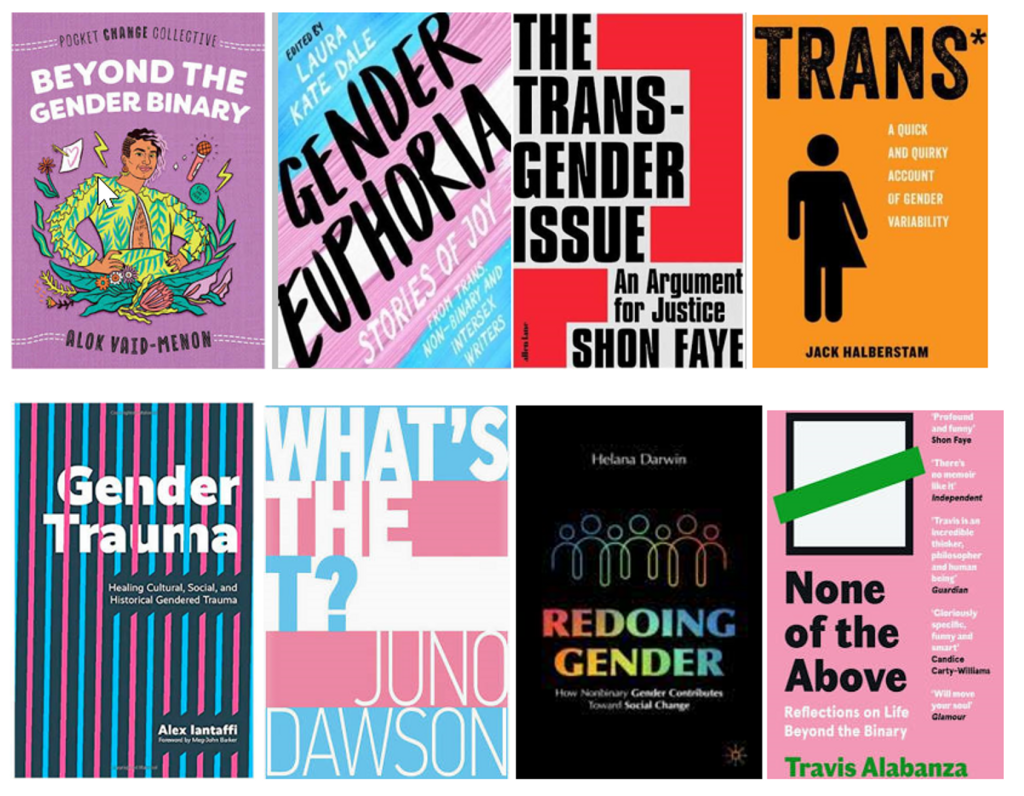
Educate yourself: This is the most important step. Many of us will not have had any education around what it means to be trans or nonbinary during our time in the education system and you may not even know anybody close to you who is trans or nonbinary. When we do not know or understand identities different to our own, we can end up being judgemental, less empathetic towards others and even discriminate against others. Education fosters understanding and empathy. Take the time to educate yourself about trans and nonbinary experiences. Read books, articles, and listen to personal stories through podcasts and human library events. This will help you gain a deeper understanding and empathy. Avoid asking trans and nonbinary people questions about their own experiences, unless they have initiated a conversation about it, as this can feel intrusive and exhausting (like when ethnically diverse people are expected to be the free anti-racism educators). Show allyship through your own learning and unlearning.
Check out some book recommendations below to get you started.
Think carefully about where you buy your books from too. Buying from LGBTQ- owned bookshops is a great way of demonstrating allyship.
#TransRights #NonBinaryPride #GenderEquality #InclusionMatters 🌈💙💖🤍💖💙🌈